Episode Description:
Most outdoor brands share a similar origin story: a founder identifies a need in the wild, builds a product in a garage, and grows a company from there. But as brands scale and growth pressures increase, something often gets lost in “the middle.” The result is a sea of epic imagery, interchangeable storytelling, and campaigns that feel indistinguishable once the logo is removed.
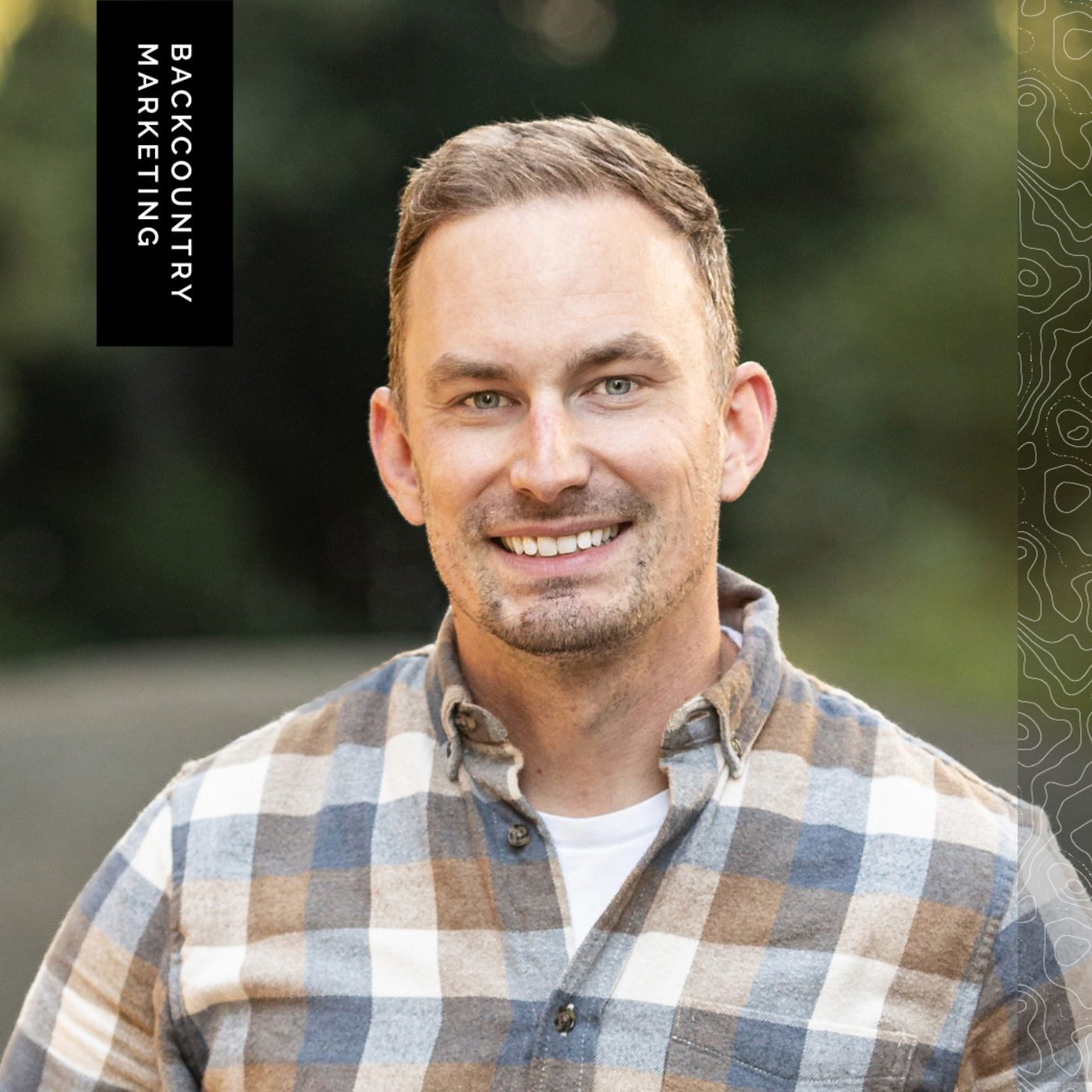
Ryan Andrist, a marketing leader whose career spans The North Face, Sea to Summit, and Starbucks, joins the show to explore a persistent challenge in the outdoor industry.
Ryan and Cole unpack how growth pressures can muddy brand clarity and why the consumer insight is more important than ever.
About:
Enjoy this episode and discover other resources below:
Slack Community | Tired of brainstorming with ChatGPT? Join us!
Insight Deck | Want 20 of our favorite insights shared on the show?
Booklist | Here's our curated list of recommended books over the years.
LinkedIn | Join the conversation and share ideas with other industry peers.
Apple Podcast | Want to help us out? Leave us a review on Apple.
Guest List | Have a Guest in Mind? Share them with us here.
.jpeg)
What's the Biggest Risk in the Outdoor Industry? Lack of Clarity
Whether it’s in the backcountry or growing a business, risk is a close companion. Yet many outdoor brands overlook the biggest risk facing their company: a lack of clarity. This ongoing consulting engagement is built to sharpen your brand positioning, content strategy, and creative direction.
Episode Transcript
Ryan Andrist (00:00)
It's not surprising that same imagery just with a logo swap is what we're ultimately coming out with. But I think a little bit of the outdoor industry is we're a little uninspired. Everyone's really attracted to the outdoor industry. You want to get into the industry because you want to ski, you want to snowboard, you want to trail run, you want to what have you. And you follow a brand in a space for the extracurricular activities. And we've lost sight of or become uninspired by the humdrum of sales and marketing.
whatever the work is that we're doing to express that. A bit of me feels like that's part of why this has become so prevalent within our industry is that we're not as inspired in office as we are out of office.
Cole Heilborn (00:39)
On this podcast, we go behind the scenes with industry experts as they break down what it takes to produce creative work that works. If you're seeking insights from some of the sharpest minds of the industry, this is your guidebook to producing creative work that actually delivers. Welcome to the Backcountry Marketing Podcast. Today, I'm sitting down with Ryan Andrist, he's a Marketing Director at the North Face, Sea to Summit, and Starbucks. Ryan, welcome to the show.
Ryan Andrist (01:04)
Nice to meet you Cole, thanks for having me.
Cole Heilborn (01:06)
Yeah, thanks for joining. We've got another fun conversation lined up for today. When you and I connected on our intro call, you kind of set up this premise of because every outdoor brand essentially starts with the same origin story, right? An individual is outside and they discover a needs, then they start a company. Well, then they make a product and then they make a company and then they're thrown into the throes of business and they're trying to figure out how to make it as a brand in twenty twenty six. It's no surprise then that the middle, how brands show up and interact and their tone of voice and the storytelling that they do all feels very similar. And so we're going to talk about this idea. We're going to talk about this as a problem, but we're also going to try to talk about some solutions and some questions that maybe you can ask yourself to try and figure out how to shake up the middle as we're calling it. So Ryan, I'd love if you could kind of give us like an opening statement.
Why is this something that you think about? Where do you see this in the industry today?
Ryan Andrist (02:06)
Yeah. And I think this is a great topic. I'm really excited to have some greater conversation on it because again, it's something that every marketing person in the outdoor space and others is facing on a daily, weekly, annual basis. ⁓ The biggest thing that we find, and it's not just the beginning, right, it's the end to, ⁓ know, whether you are coming at it from a private equity space or just a brand trying to continue growth, there's a space where we're all trying to end, which is profits and
brand awareness, growth, et cetera. And that beginning part is where a lot of brands find their story. So you really come out to the space where your, your founders, like you said, have, are creating a product they couldn't find in the marketplace. And then they make that product, which starts the company. That's probably from their garage that ultimately leads to here we are as a seat of summit and the North face. ⁓ So what are the decisions that we make and how do we get there in the middle? That really helps set us apart. Understanding who your brand is.
coming to a place where you understand very, very specifically who your consumer is and customer and what is it that they need. And this sounds very rudimentary, but again, these are the things that get lost as brands grow or requirements from the higher ups ⁓ start to push through with a company. Now, I do want to be fully transparent with you. actually had a conversation with an individual a couple of weeks ago and he said to me,
⁓ He was like, you know, I hate this that everybody always says that you just slap a logo on and on these outdoor images and they're the same. If I hear that one more time. Well, but it's true. Right. We're all saying the same thing. It's true.
Cole Heilborn (03:44)
Yeah, there's so much to dig into there. Totally. But no, sometimes I feel like on this podcast, we talk about the same thing every single episode. Sure. And part of that is there's truth to that because the fundamentals of business and the fundamentals of marketing, they haven't changed since whenever they were invented, right? It's like, know who you are, know your value proposition, know your customer, and that's about it.
There's so much nuance though, and I think a lot, I just wrote a LinkedIn post about this this morning. I was thinking about the logo problem. Like every outdoor brand basically produces the same type of media assets. And if you put the logo on one or the other, you can't tell the difference. And I was thinking about this episode that we were gonna record today. was like, I think most brands have a clarity problem. And that clarity problem,
intersects with all of these different pieces of your brand story, the origin story, your value proposition. But it takes time. It takes work. It takes effort. It takes the right people, the right outside perspective to help you find that clarity. And then you have to hang onto it and guard that as you march down the grow and yeah, grow the business. I feel like there's a lot to dig into. And I think a lot of it just deals with
with clarity and finding the answers to those questions. ⁓ Tell me more about this person that you were talking to who hates the thing. ⁓
Ryan Andrist (05:20)
So a friend of mine, and he's a global brand director at another brand, but he was saying to me that ⁓ he feels very much that the industry, part of why we're having this conversation today is that the industry also uses that ⁓ as a bit of a crutch. They say, this is just how it is. And then they just resign themselves to putting out Epic Imaging because we shot that, so we own that.
And then we put our logo on it that's good enough. And he felt like that is not the solution that is being asked of. It's just the creation of a crutch again for them to ⁓ lean on as they need.
Cole Heilborn (06:02)
Interesting. So ⁓ what would the solution be in his mind?
Ryan Andrist (06:08)
Um, so we didn't get deep into that part of it, but what I would say is he, did talk a little bit about some of the things that we're discussing. did tell him I was, I was having a chat with you and, and, um, he wanted to, um, uh, discuss like a little, some thoughts on what some of that stuff is. And, and we talked about brand, we talked about our story, we talked about consumer stuff. And again, everyone believes that, right? We all believe in that. Just, I mean, you just said it yourself, even as we set this up, that we all believe in that, that those things are the things that are important.
But again, I think the issue here is that people are, they lose track of those things for a myriad of reasons. The other thing I was going to say too, as I thought about this some more as well, is that I feel a bit like the outdoor industry and call it, you know, the beat up of, you know, since COVID because, you know, I don't think anybody's doing super well. I think there's a lot of brands doing well. ⁓ But I think a little bit of the outdoor industry is we're a little
We're a little uninspired by the things that we're doing. Therefore, it's not surprising that same imagery just with a logo swap is what we're ultimately coming out with because as you know, in the outdoor industry, lot of people are, everyone's really attracted to the outdoor industry. You want to get into the outdoor industry because you want to ski, you want to snowboard, you want to trail run, you want to what have you. And you follow a brand in a space for the extracurricular activities.
and we've lost sight of or become uninspired by the humdrum of sales and marketing and whatever the work is that we're doing to express that. ⁓ So a bit of me feels like that's part of why this has become so prevalent within our industry is that we're just not, we're not doing, we're not as inspired in office as we are out of office.
Cole Heilborn (07:55)
interesting. There might be something to that. gosh. OK, well, let's try to inspire some people with this conversation. I love it. So OK, let's come back to the origin story. ⁓ And this is a really common origin story amongst, it seems like, every outdoor brand. ⁓ How common is this from your perspective? The founder was outside, made a product, started it in his garage, and then it turned into a company.
Ryan Andrist (08:03)
Great.
Cole Heilborn (08:24)
Is that the case for 90 % of outdoor brands out there, you reckon?
Ryan Andrist (08:28)
I would say yes. Yep. In fact, I spoke at OMS or Outdoor Media Summit a couple of years ago and I made the statement about that exact thing and the show of hands in the room of how many people have that same story was unbelievable. I could hardly see anybody that didn't have their hand raised for that. So yes, absolutely. 90 percent.
Cole Heilborn (08:49)
There's nothing wrong with that. We love those bootstrapping stories. ⁓ Where then do you feel like... What gets lost ⁓ over time and where is that junction point or series of junction points?
Ryan Andrist (09:02)
Yeah. So ⁓ one of the things and I'm just going to put this related to a past role. So when I was at Sea to Summit, we had the same exact ⁓ story. And one of the things that we tried to focus on more was that Sea to Summit was Australian brand. The belief there is especially for a North American audience or a European audience, Australia is a very sexy continent. ⁓ So the ability to
focus in on the red sand and the blue water. And by the way, it's grounded in being built in your own garage by really hardworking outdoor enthusiast was a big part of the stories that we would tell specifically because we didn't want to just show the image of our founder in his garage, you know, working on a sewing machine, right? That everybody has that same black and white image.
So trying to pivot that a little bit to focus on, it doesn't mean we lose it. just means what, how do you pivot or put a different lens on it that allows you to stand out? And that that's what we did there.
Cole Heilborn (10:04)
Yeah, gotcha. What role does growth play in muddying the water in the story?
Ryan Andrist (10:12)
all of it. I hate to say it, growth is the demon of marketing storytelling. Now, we have to have it. I get it. It's part of it. But you are always positioning really, really great stories against what is the conversion on the back end. And that doesn't always come out to work in your favor because sometimes you
muddy the story to get to the growth or you're muddying the growth because your story is just too far out there. I always liken it to ⁓ a TV spot or a movie or what have you. And there's a difference between the person that is focused on a logo in the background and they zoom right into it, just straight onto it, or the camera is fixed and the logo happens to pass by it.
Like there's a difference between those things. And when you're very, very focused on growth, you just zoom right into the logo. That isn't always as connecting or engaging with an audience versus ⁓ sales. Whereas if the logo is passing by, you're catching it, you're seeing it, you're connecting with it, but there's a story that's being told in the passing that you ⁓ are getting greater consumer engagement with. It comes down to also a piece of like, what's your lifetime value?
in that story versus your what are you buying today? And oftentimes in the growth space, you're finding today's conversion, stealing from Peter to pay Paul kind of a thing and a lack of vision to long-term growth.
Cole Heilborn (11:50)
I see. Are there any instances when you look back on your career where you're like, man, we really sacrificed the story or we muddied the story because we started to chase something else? Are there examples that you have?
Ryan Andrist (12:03)
Yeah. So I'll give a couple of them. So number one, see the summit. A couple of years ago, we started out on a campaign that was called ⁓ Evolution of Adventure and loved it. I absolutely loved it. The idea of it, the the the product focuses, the audience focuses, the way that it was shot was was beautiful. was a beautiful story and personally felt like it was a messaging that really
⁓ really would impact the outer audiences because it wasn't just about hand climbing a mountain, bloody knuckles. It was a understanding of who we were as a brand and the way that we connected as we evolved what adventure means, right? There's new people coming into it out of COVID. It wasn't just hardcore, know, bloody knuckle people. was literally families that are now doing things they had never done before in the outdoors. And that's why it just, really resonated.
And during that year, we ultimately were nudged, gently nudged into a sales space where it allowed or forced us to put less dollars on the story. I know I'm going to call it the brand part of it and more into the product marketing, which was very, very, like I said, the logo focused delivery that ultimately drove sales today.
And honestly, I felt we lost the really impactful story.
Cole Heilborn (13:33)
Hmm. What's the... I mean, that's probably a situation that many can relate to. What drives a decision like that, I'm assuming from leadership or the higher ups?
Ryan Andrist (13:46)
⁓ yeah, I mean, the, my, my, there's always a forecast from a sales standpoint. when you're hitting that forecast, nobody says anything when you're not hitting that forecast, there's a lot of opinions. So I think that is, that's, that's very simply where it comes from. ⁓ I also think that the other thing you find, and this is something again, all marketers are facing is that we need to reach a place where we understand how to track those more meaty story.
that we're telling about what is the conversion or what is the analytics behind those that prove their value? ⁓ Because it's very easy to prove sales value, right? Like that, those analytics are right there front and center from an e-commerce space to a retailer space. Like it is nonstop in your face about your sales forecasts, but we need to do a better job of supporting the brand stories and getting buy-in because we have to sell internally ourselves, right?
Selling internally to leadership like this is why this is important. Here's our forecast for how this is going to provide a return to you ⁓ is the thing that I think we need to do a better job of to be able to tell more of those.
Cole Heilborn (14:55)
Yeah. So you bring up something that I think every brand marketer can, is probably laughing at is like, yeah, it's, it's, it is notoriously difficult to track some of these things. Obviously there are ways to do it. But my question is always is the, is the difficulty in tracking the, the impact of brands is that, is that a lack of tools or is that a lack of clarity about the problem that in this case, your campaign and the messaging behind it was actually trying to solve.
Does that make sense?
Ryan Andrist (15:27)
Yep,
I'm gonna go with the latter of it. I'm also gonna add to that, I think it's also a bit of what I was talking about earlier around just being uninspired. It's a lack of creativity and analytics, if that makes sense. Like being able to set up the campaigns that you're making, the reason why you're making this thing, the objective of this thing, having a...
measurement framework in the upfront of it that shows, and here's how I'm going to track that because you've been creative and thought up here's ways that we can, I don't need a tool, although there's lots of great tools you'll have to include in this, but how do you come up with what is that framework to prove its value ⁓ is one of the things I think you're not seeing as much. just want to make, this is going to offend some marketing people. People want to make pretty things. They want to make beautiful.
Stories that make the hair stand you make plenty of these that the hair stands on your arms, right? Like that that's what they want to they want to do and there there's a lot of marketers that are missing that ⁓ Delivery of now. How did it perform?
Cole Heilborn (16:32)
Well, I mean, it's a great question and it should be asked and I think every marketer has to justify the pretty thing that they're making. If there is no connection to a problem, then why are we even making it? I would argue that all day long.
Ryan Andrist (16:49)
Sure. Yeah, I mean, again, I just find that in my career, ⁓ you know, there was a time when we just made lots of stuff. You made lots of content. made lots of video. You made lots of assets and imagery. And yes, of course, you had product as well. ⁓ But there wasn't a lot of emphasis on the return that was happening from your, I'm going to call it your brand awareness builders. ⁓ We're in a space now where budgets aren't as lucrative as they once were.
We're in a space now where every dollar needs to work extremely hard to deliver on not just the branded, the awareness portions of it, but also the sales conversion portions of it. And then how do those things talk together? Like how do they work seamlessly together? And some of these are very easy, I find are very easy solutions. ⁓ It's just things that we've forgotten as marketers we've gotten away from because again, I think there's this uninspiredness that is occurring in this industry.
⁓ because of the, this is just being beat up over at least the last few years. ⁓ And even, you know, a bit before COVID, COVID was just a cut COVID out of everything because that was a weird time for the outdoor space. We got really lucky and some people made some really good money during that time. ⁓ But now like rubber hits the road post COVID and we really need to sort out and prove our value worth.
Cole Heilborn (18:10)
Yeah, so if you were building a campaign or some sort of branded entertainment today, ⁓ what sort of KPIs would you be attributing to that that you would be justifying value on?
Ryan Andrist (18:23)
Yeah. So easily from most of the brands, and let's take the North faces out of it, where your brand awareness is like 95%. Number one is looking at brand awareness. How are you tracking that? What does that look like from even Google search terms, et cetera, and using an agency or somebody that will do a brand tracker for you to continually do that. So number one, that's where that starts. Number two.
There's this merge of e-commerce and brand, I think, that is missed in a lot of places, and that is utilizing an e-commerce audience to be able to track and look at and gather information from that drives more brand delivery, ⁓ or at least data to what is happening on the brand front. Like, where did you find that? What made you buy this? Where did you find this? How did you get here to purchase this? Things like that, which means we can then attribute.
sales dollars to the brand efforts, whether that's PR, TV, any of those kind of things.
Cole Heilborn (19:26)
So like a post purchase survey type thing? Yeah. Yep. Yep.
Ryan Andrist (19:30)
or even
just coming to the web like traffic, even on the front end, just understanding how they even ended up on your website. Because the truth is people aren't always just miraculously searching your brand name, especially if you have low brand awareness. They don't know to even look for you. So how did they get there? ⁓ I think understanding a really strong ecosystem of your plan so that you know what the things are and where they're driving or how they're driving to you. ⁓ And then having very intense
know, metrics against each of those, I'm going to call them moons in your ecosystem, right? That are driving back to the sun. Like how do you, how do you understand each one of those to have a metric that will tie back to you, not just brand awareness, but also sales conversion. And then, I mean, again, we haven't even talked about the middle part of the funnel, like being able to have that consideration and engagement space too, which I think from an outdoor space is really the place that we thrive, right? Thrive at getting people to
care about us and be inspired by us. ⁓ So a little more of that I think could go a long way with Rance.
Cole Heilborn (20:34)
Do you feel like outdoor brands do that well? The middle of the funnel?
Ryan Andrist (20:38)
⁓ No, I don't. I mean, not now. I think there was a time. another one of the examples I was going to give you for the for a previous question there was just around this idea of, you know, when I was at the North Face, we used to make a ton of content. ⁓ In fact, I I would often say ⁓ there was content sitting in the external hard drives that sat under a desk that never saw the light of day. There were so much stuff, ⁓ which was great, but it was very expensive. So your your
We were kind of just wasting money, but it was a time that you could get it, whether it was athletes or campaign stories or what have you. And the thing that we really missed was how do you tie those into the conversion piece of it? awareness wise and getting, and we also, again, 95 % awareness, you know, getting our audience base to connect with it and sign up for things and watch the videos and all those kinds of things, you know, engagement across the board.
was not a difficult thing then, but that also came with a big budget behind it. When I look at where we all sit today, and even the North Face, know, the budgets are not like that. So therefore we have to be very specific with how those dollars are working. And content, yes, is still king, but content is expensive and people have to make sure that every content piece has a purpose.
Cole Heilborn (22:02)
So, okay, yeah, this is more of a, this is like a chicken and an egg question. If you're talking about a time when budgets were flush, the ability to produce content was much easier and much quicker and, you know, more green lights than red lights. What changed? Because it's easy for marketers today to blame the budget and say, we don't have enough to produce the content that we want to produce. if in recent history,
there was enough budget and there was enough content. Theoretically, if it was done well, that would drive the business and the value would be seen and understood. And budgets today would reflect content budgets previously. You see where I'm going with this?
Ryan Andrist (22:50)
Yeah, I think one of the things that has occurred is, we are being more effective, right? We need to be more effective with the dollars and the content and the things. ⁓ We also have to be more efficient with them. So it's not just making it rain content. And we wouldn't want to do that because, again, teams tend to be much smaller now as well. So when you're doing that, you don't have the time to be
going through all of the pieces and trying to make, you know, hundreds of hours of footage to sort out how that's going to work. So you need to be very effective and very efficient with the work that you have. But that all comes from, again, like you said, chicken before the egg. You also have to be very strategic about how you're getting there. having a content strategy before you are making that content, having a annual, you know, your communication plan or an overarching strategy that has very specific goals behind it for your annual plans.
are things that you kind of, you won it, winged it a bit before, right? So now you're in the space where you just have to be really smart with the dollars that you have. ⁓ If we had those same budgets, wouldn't say that we are gonna make the same amount of content. I would say we would still be in a space where we would make a lower level of it, but it would work a lot harder for us.
⁓ We would do more things with it because right now you're trying to cast as wide a net as possible while also being very specific to the audiences that you are connecting with.
Cole Heilborn (24:25)
I see. Gotcha. I want to come back to kind of the founder origin story. Sure. So that, yeah, the origin story is everywhere. ⁓ It then becomes a question of, if we all have the same story relatively, where do we go? ⁓ And, know, to use an example of Microsoft and Apple, both of them have basically the same origin story. tech geeks in their garage, you know, developing, building computers.
but they're both vastly different companies and brands. ⁓ Yeah, talk me through how you would go through the steps to differentiate ⁓ an outdoor brand, like if you were starting one today.
Ryan Andrist (25:05)
Yeah. So, ⁓ man, that's a big ask to start a brand today.
Cole Heilborn (25:12)
I'll only be a 50 % equity partner.
Ryan Andrist (25:15)
It was your idea. Thank you. ⁓ So if I was starting one today and actually this is a statement that I've always I've always asked every brand that I've ever worked at to just, you know, test the water litmus test how and what they actually feel about their existing brands is sit down and say, OK, what is out? What is our story? Let's go back to what is some of the very basic things of how I even got to this place. What was the thing that inspired me to make this brand?
And yes, there's a consumer need that is going to occur in there because you you're not going to just make something that you don't think that anybody wants. But also, like what was when I was a kid, like what was the thing that maybe that I had that thought of way back in my life? Like what was that? My grandfather's watch that I really liked that had a leather strap on it and was made of a stainless steel material, whatever that was that really made me want to make this thing and then dive that or thread that into ⁓ what is my ultimate story.
The other part of that, though, is now let's figure out what those tenants are like. So what is what do you look like? What is your logo? Like what is all of these things that lead to like what is what do I stand for as a brand? What is my my vision for where I want to take this thing? Understanding this is like your classic brand pyramid that I'm nerdy enough in the brand space. It's like I need to fill in all of these little buckets to make sure that I have all of these pieces. ⁓ Once I've established that, I mean, I would even say that to anybody, ⁓ even if
make it four pages. Like, what's my brand book? Like, what is, what are the things that I, what are the fonts I want to use that represent all of this? What are the colors that I stand for? And again, establishing those tenants of a brand. ⁓ I also think there's a bit of, you know, what is the tone? Like, what do you sound like? One of my roles at Starbucks back in the day was, you know, really understanding the brand book and the pieces that were in it and really being able to craft that story. Cause Starbucks is a very complicated.
⁓ brand story and background, but within that, you know, understanding all the different places that their brand serves a purpose and what does that sound like, look like, feel like, ⁓ which is really something that in my mind, even if it's a small, I don't care if it's, you know, you're a $50,000 a year brand ⁓ is understanding what those things are for yourself and not just caving from a sales standpoint. Cause this is the best times when you're 50,000, that's some of the better times.
when you're not forced to be the 50 million or the 100 million. Those are the fun times where it's scrappy and exciting.
Cole Heilborn (27:45)
Yeah. I've heard this said, and I'm curious how you'd respond, because so many of the environments where these brands operate are the same, right? It's like most outdoor brands have found themselves in Yosemite. ⁓ Therefore, Yosemite is a backdrop for a lot of ⁓ photography, a lot of media, a lot of ads, et cetera, that then limits the creativity in the expression of those assets. ⁓ Do you agree? Do you disagree with that?
Ryan Andrist (28:15)
I do. I think your setting or your origination, like where you started, ⁓ is a very important piece of it. mean, that's oftentimes where you pull some of your colors from, or that's often where you pull some of your terrain from, right? When I talk about Sea to Summit, I'm referencing, you know, ⁓ red sand, bright blue water.
you know, some of the, there's not really crazy mountains in Australia. So we still tell a mountainous story, but we tell it in a different fashion. ⁓ you know, the, the difference between a deciduous tree and an evergreen tree, like part of a brand that matters. ⁓ so I absolutely think that your location, ⁓ is, a big part of who you stand for and what you look like. I also find that you see, you see a lot of brands, ⁓ in the days that have
had a CEO or somebody come in and they up and move the brand to a completely other space. I I'll even just use like in the North Face, you know, when I was at the North Face, it was in Alameda, California, and now it's in Denver, which is, I don't want to say very different, but it's pretty different, different space there from the Bay to downtown Denver.
Cole Heilborn (29:25)
Yeah. But do you feel like that's a crutch? This limiting belief of, well, we all play in the same places. Therefore, how we show up is the same in the digital world.
Ryan Andrist (29:38)
Yeah. So one of the things that I find super and I'll just use Sea to Summit as a good example is that we made a very conscious decision that we did not want to ever show bloody knuckles. I've said this even before here and we did that because when I was at TNF, you're a top of mountain brand. That's how we acted. Those are the people, was a lot of individuals or maybe a small group of people. When I was at Sea to Summit, we essentially stated that we are a tree line brand.
Right. We won't go above tree line. We are going to be in the trees at the base, you know, halfway up. ⁓ Oftentimes we would talk about we aren't just going to show one person getting after it. We're going to show at least two people and even an extension to show families ⁓ as you're out doing camping with because you want to be able to connect with that audience. Those are the people that we cater to. So I do think that there is
ways to get around the crutch of everyone showing the same kind of top of mountain experience. Although some brands are very much top of mountain. There's just a space where you need to understand the niche that you play within that. And the other face is not a TNF is not a good example because they play in so many of those spaces. But if you get into brands like Rab ⁓ or some of the other more niche brands, there tends to be a little easier way to focus on what is that thing that you are providing for that space.
even if there's other people in that space.
Cole Heilborn (31:07)
Yeah. Well, no, so expand on that. I think finding that niche or niche, however you want to say it. I think that's kind of the key in my mind to how do you solve this question of showing up in a different way? ⁓ I have some thoughts, but I'd love to hear your thoughts on how do you actually do that and present differently? Yeah.
Ryan Andrist (31:31)
So there's a bit of a, and I'm just going to use imagery as a ⁓ bit of a perspective on what that is, because some of the ways that I think we have all become very vanilla in the space is that it's a lot of epic background, right? I'm at a mountain, I'm on a beach, I'm in some foresting trees, what have you. I think one of the ways that, and I'll use a social media example ⁓ as a good one, is that one of the ways that we found as we started
started diversifying our platforms is that you can't just take the same image of this coffee cup and put that coffee cup on every platform in the same way, because each platform has a different purpose. So whether it is a really close up view of the handle, because you're going to talk about the technical delivery of why that fits the mold of your hand, what have you, or it's the really clever saying that's on the front of the mug that tells you love dogs because people are dicks, or, or
⁓ it is the content that's inside the cup, right? So there's like three different ways that you can look at that thing. And I, my personal opinion is that that is how we in the same fashion can differentiate ourselves as brands versus everybody having a kitchen table with a coffee mug on it. If that makes sense.
Cole Heilborn (32:48)
Yeah. it's the same object, but there's multiple perspectives and angles. So what role does an audience insight or human truth play in kind of crafting this niche and this equation?
Ryan Andrist (32:54)
Correct.
I personally think that the consumer insight is one of the most important things that gets missed. ⁓ I am a huge ⁓ advocate of ensuring that that is something that is always happening within teams. And I don't necessarily an agency that's always bringing you or coming to you once a year that says, here's the best thing that you have to do. I think that is a cultural delivery for a brand that really helps set them apart.
and really helps them set them up for what is a full year of an annual campaign. ⁓ And I say that from the standpoint of, think there's, whether it's podcasts that you listen to or journals that you subscribe to or ⁓ having a step within your processes within a company that is always delivering things about that.
I used to have stand-up meetings every week with teams, different departments, and then departments together. And we would always say, OK, here's kind of the things you have going on for the week. And then everyone had to bring a here's something they saw that was specific from a consumer perspective in the marketplace, what they felt, what they thought, how they believed it to be, who they thought it was talking to, some of those type of things. And again, not every one of those is the newest, greatest, latest, awesomest thing. But it just keeps our minds thinking about.
that specifically. ⁓ So I think it is the the biggest and best. Now, is it easy to be like golden ticket every single time? No, I mean, it's really, really difficult to feed through and filter through all of that to find what is the true, true insight. ⁓ But when you find it, that insight is the thing that drives most everything within your campaigns.
Cole Heilborn (34:55)
And I guess that's why I feel like all this comes back to is just clarity. That like that's again, that's a clarity issue. What is what is the human truth that, you know, our content is organized around? Does that do you feel like folks have a hard time finding that because either they don't have the resources to gain that perspective or is it because the audience the audience and the customers that they're selling to are so disparate and so wide?
that it's really hard to find a compelling human truth that speaks to each of them.
Ryan Andrist (35:31)
Can I say both? Yeah, yeah, it is. ⁓ You know, I think our world ⁓ has, and this is not an excuse, I think our world has gotten more difficult because A, there's a lot more people saying things with opinions about what they do, don't do, like, don't like. ⁓ They're communicating that a lot more out in the world. ⁓ Anyone's social media feed can show you and tell you all the different things that people are feeling. ⁓
Cole Heilborn (35:32)
Sure.
Ryan Andrist (36:01)
that makes social listening super tough or back in the day, that was actually a really good insight and tool to be able to use. ⁓ I think there is oftentimes ⁓ our own fault. We throw so many things at folks. It's really difficult for them to always know exactly what they need. So you as a marketer are playing part marketing communicator and part psychologist, sociologist.
⁓ to really sift through and figure out, what is the real insight that you're finding here? And then how do you validate that insight? And oftentimes it may be, let's explore three insights. We have this nugget, this nugget, this nugget, and then explore what that could be and how does that relate to us and the work that we do. And then as an organization, you choose the direction that you ultimately put your money on. But again, as we've all seen, that doesn't always net success.
⁓ But I think if you're not starting there, then you're already down the wrong path.
Cole Heilborn (37:01)
I've always thought about these insights as kind of the combination of a human truth combined with an observation that helps solve or supports the value proposition of the brand. That's kind of the equation I think about it with. I feel like when you tell me this is true for you, but like when you find that insight, I feel it. It's like this aha moment. You're like, ⁓ this is it. And sometimes it's really simple and it's been.
in front of your face the entire time and other times it's hidden beneath the shadows and you gotta turn on a flashlight to find it. ⁓ Do you feel it when you find it?
Ryan Andrist (37:38)
Absolutely. And I love your equation there. think you're spot on with with how you get to that point. ⁓ I do. When you have it, you're like, ⁓ my God, this is this is this is it. Now, I've also had those moments and then you test it against some consumers and they hate it they don't get it. And because we're too close to it, we're all too close to it. I always say, like, I get served the ads, but I'm not the target audience. It's just because I'm always connected to the brand.
But yeah, yeah, I think there's that's absolutely the moment where you feel really good But that's also that is part of what drives that I'm gonna go back to what we were kind of talking about earlier Like that also drives that inspiration like that feel that aha moment You just talked about is when the hair stands up on your arm You're like, my god when I present that like I get teary like I'm excited like it is that good and then you start, know, you're sussing out kind of what are some of the bits and pieces that you're gonna use against it as
examples because you haven't built all that out yet. But that is when I'm super stoked about about where this is going to go. And again, I have been proven wrong before. Like that is that's one of those like it's not always it. But that's why you look at, know, it's the rule of threes, right? You always have a few of them that you're kind of working through. And I will always err on the side of when I search it with groups and have conversations with consumers. If it's not working for them, it doesn't matter how much I love it. It's probably not going to be the right one.
Cole Heilborn (39:02)
Yeah. Talk to me about competitor research, because obviously a way to vet this insight or ideas ⁓ is to look around at what your competitors are doing to make sure that you're not stepping on toes or someone isn't basically saying the same thing. The running space is guilty of this a lot. They're all saying, not all of them, some of them are doing a really good job differentiating. A few of them are basically saying the exact same thing that each other are saying.
And I just wonder like, gosh, if they just did like a competitive analysis or a content gap analysis, they could see very quickly that, hey, what we're saying sounds almost identical to this other brand. ⁓ Is that a tool that you guys have used before?
Ryan Andrist (39:45)
Absolutely. And I think that's actually not just a tool. That's a that should be a habit. Right. Like any any good marketer out there if you're not paying attention to within industry or category and looking at all of the things that are coming through. I mean not all of them but the majority of your competitive set to understand what it is that everybody else is doing as well as what are some of the
outside of your category, things that you want to just use as inspiration or look at, or how can you transition that into something that works within your category? If you're not doing those things on a daily, weekly basis, then you're missing the boat for sure. Absolutely. And I say that from a multiple spaces. So not just the ensure that your look and feel is not the exact same as a competitor, because if there's one thing your audience will do is suss that out immediately and call you out.
So you never want that to happen. ⁓ But also just to understand like, did that thing they did actually work? Was that actually successful for them? ⁓ So that you're not repeating the errors of somebody else. So I agree 100%. That's got to be a habit within your team and company.
Cole Heilborn (40:55)
I, this is something I advocate for on like the branded content side or the brand entertainment side of the business ⁓ is like somebody, know, brands want to produce these stories. And my first question always is like, well, why this story and how does this connect to the goals? But you get down the list of the questions to ask. And one of the questions is like, well, why is this story unique to your brand?
Are there other brands that have told this exact same story? And if you do a little research, you quickly find that most brands have told basically the same story. And it makes no sense to me. Why would we put all this time and energy into producing this thing that's already been done? We got to find a way to make something unique and different for your brand. ⁓ It just takes a little bit of research and clarity seeking to answer that question.
Ryan Andrist (41:46)
Yeah, cool. We call that the competitor sniff test. That's exactly we always have to do that. Absolutely. For sure.
Cole Heilborn (41:53)
⁓ Would you say that, you know, so we're trying to figure out like how can brands shake up the middle? How can they present themselves differently? How much of this equation is rooted in kind of finding ⁓ that niche or that human consumer insight? Like are we overweighing that as importance or does it really make up 60 % of the equation of like how you show up in the world differently?
Ryan Andrist (42:22)
Honestly, don't think we're over weighting it. Honestly, this is opinion of one here. ⁓ I think the consumer ⁓ insight, I believe the consumer insight is the, if not one of top three, most important things that someone should be looking at. Again, it doesn't need to mean that there's an agency that's feeding you consumer insights. It is even just that you're grounded as an organ. Why don't you write the brief? I'll have a brief.
Some people don't that's part of the problem when you when you write the brief that consumer insight or insights that you're providing Need to be some of the first things you talk about like what made you do this? So I don't think that I don't think we're giving it too much weight. I think what happens is that either We're not we're not testing to see is that real right is somebody just made that up We're not we're not checking to see did we actually execute?
to that? Because oftentimes, right, you've probably seen this in your career as well. You get a starting point and then you start executing somewhere, you get off track and nobody course corrects that. So are we holding true to the insights that we have provided? And then I always say that the other biggest thing is how are we connecting everything within it, right? Can't come to me and say, hey, this is going to make a great TV spot and then go make this. And that's the end of it. Like this has to be the TV spot that does.
these things, the TV spots are connected to our social media, that's connected to our retail environment. Like how do you extend this across all of the touch points? Because again, the dollars are not always there. The power to do, the people to do the work is not always there. So you don't have time to ⁓ waste time.
So ultimately it is a space where you are ensuring that this thing is, I guess we're back to some of the stuff we said earlier around efficiency is as efficient as possible across every touch point you can imagine. those are the things that I think are the most important piece of what you're gonna make.
Cole Heilborn (44:26)
All these, I'm generalizing here, but kind of the working theory we have is that a lot of these outdoor brands are just showing up in a very undifferentiated way. ⁓ What sort of perhaps negative sentiment or negative association does the audience then have with the brand if they aren't spending the time to really try to uncover some of these insights and then create from that? ⁓
I guess I'm thinking about, I've heard this from social media experts, I've heard this from paid media experts, that sometimes when, you do something poorly and you do it over and over over again, you actually create negative association with your brands. ⁓ And this kind of gets into the equation of like, well, what's the opportunity cost of not doing this stuff? Do you see a negative sentiment connection to brands as we're talking about all this stuff?
Ryan Andrist (45:23)
Absolutely. There is, and I would say more now than ever, right? Like there is a lot, A, people have a lot of choices. There are so many options out there for them across a large swatch of products. So number one, they have more options to choose from. So if they don't like you, it's easier to step to something else. You're not the only one. ⁓ Number two, I find even in a younger demographic that if you're not connecting with them, with the audience on some level that
they don't feel, and I'm going to say an emotional connection, but I do think, especially in the outdoor space, we provide an emotional connection to a piece of plastic. And I think that's important for us. And if you're not providing that, ⁓ they don't feel connected to you. It feels more of a commodity, a widget, ⁓ that they are less likely to ⁓ A, purchase again, and B, ⁓ speak fondly of you.
⁓ So, and I think that is super, super important. ⁓ The other thing I would say is that ⁓ this audience that is in the world, if they don't feel that you care, right, this is where it gets into the amount of people that are purchasing from a brand that has a sustainability delivery within their makeup. ⁓ More people are doing that than ever have before. So again, that's not even specific to that product. That is specific to you as a brand.
If you're not, for lack of a better term, checking those boxes, you are already lower on the list with the audiences. So absolutely, I believe that is important to show that you made the effort to care about them and you're not just selling them.
Cole Heilborn (47:09)
100%. Yeah, I mean, but that applies not only to your sustainability and your brand values, but also just in the content and the media that you serve to your audience. If you ask the question, am I respecting my audience's time and attention with what I'm interrupting their day with, basically, I think you got to answer that question with a resounding yes. We are making it worth their time, even if we're interrupting the YouTube video that they really want to watch.
Ryan Andrist (47:36)
Absolutely. I mean, I'll even say if I see an ad too much, right, I'm off put a little bit. Like if every other ad is X brand, ⁓ it starts to off because it feels like they're trying too hard. You know, like even that. And I haven't even touched the product yet. I haven't bought anything. I haven't clicked on it. ⁓ I oftentimes, well, I have that same feeling. I'm just like, now I got a bad taste in my
So yes, I think where you show up, how you show up, the frequency at which you show up, which again, these are all like classic media, media deliveries are all important. it is, I mean, this, I hate to say this, man, the marketing space is very much so a, you're on eggshells a little bit because you need to sort out what are those things and stay away from steer clear of the things that are not going to ⁓ connect with the consumer.
Cole Heilborn (48:30)
What have we not discussed that you feel like folks should be aware of as they're trying to figure out how to stand out in this middle ground?
Ryan Andrist (48:37)
That's a great question. I'll tell you, I say this and I said it a little bit before, I'm going to... I know you said things that we have not talked about. I'm going to double down. Like, I realize that, you know, we say these things and again, all the marketers listening are going to say, I know that, that's exact. These are these are 101s of...
Cole Heilborn (48:49)
Feel free to double down.
Ryan Andrist (49:01)
But I'll tell you, every brand I've ever worked at, the understanding why you're doing this thing, understanding who I say this for your personal life, why you're doing what you're doing, who you are, and being consistent in that delivery is those are the pillars of what we need to do as marketers. ⁓ And that takes a lot of smarts, and it takes a lot of work, and it takes a lot of budget to be able to do that and then defend that work with
leadership and defend that work with your peers. ⁓ I think there are some of the biggest things to ensure that you stand out in the middle. ⁓ But oftentimes I feel like there's so much noise that's happening and there's so much right because cultural relevance that plays a big deal with everything that we do as as brands and that cultural relevance sometimes let's just say the Olympics jumps up in the middle and some things happen within the head that you have to pivot with.
But if you have your course, you have your plan, and you can stick to that plan with maybe some slight alterations, I think you're gonna be in a pretty good space, but it just is really, really hard to do. And I know that in my career, I've been challenged every year on that, so.
Cole Heilborn (50:14)
Hmm.
Sounds like the ticket is just to work for a really small company or start a company and limit your growth so that you have less people to answer to.
Ryan Andrist (50:30)
More money, more problems, man. ⁓
Cole Heilborn (50:34)
⁓ no, but it's such, think this is a great reminder and it's such a great. Yeah. I mean, I guess reminders like this stuff is not, it's not, it is groundbreaking, but it's not groundbreaking. Like it's, it's tried and true. Ryan, we covered a lot. What else do you want to leave the audience with before we sign off?
Ryan Andrist (50:55)
⁓ man, cool. I love the outdoors. ⁓ I love the outdoor space. love the outdoor work. You know, I grew up in a super, super small town in Montana, so the outdoors has been part of my blood for as long as I can ever remember. ⁓ We didn't spend money as kids on big vacations. We just went in the mountains. ⁓ So it's always been a big part of it. And therefore, that passion.
⁓ that grit, understanding of, I would even say your small town ⁓ ethics are always in a space of how does that translate to just people? for anybody, I realize as marketers, we have a lot of hard decisions to make, but ultimately the space I always say is just being good humans, ⁓ doing the right thing. ⁓ Yes, we have to sell things, but we also have to tell real impactful, positive, inspiring stories sometimes to ourselves.
Cole Heilborn (51:52)
well, Ryan, thank you for the time. Thank you for the thoughts and the ideas. If folks want to connect with you, where can they find you? LinkedIn?
Ryan Andrist (51:59)
Yep. Yep. You can find me on LinkedIn. can, you know, my email is andrews.ryan at gmail.com. Yeah. All the socials. I'm all there.
Cole Heilborn (52:07)
Well, thank you again for the time. Thank you for hopefully inspiring folks who are listening to this. There is something freeing once you realize that the formula to success isn't actually that complicated. It just takes some work and creativity. If you got those two things, then the sky's the limit.
Ryan Andrist (52:26)
Absolutely. Thank you so much, for having me. I appreciate it, All right. See you. Bye.
Cole Heilborn (52:31)
Thank you for listening to this episode. If you enjoyed it, please consider sharing it with a friend or leaving us a review on Apple. And remember, as you're working on that next piece of creative, the difference between creative that works and doesn't work often comes down to the hard questions that you ask while you're shaping.