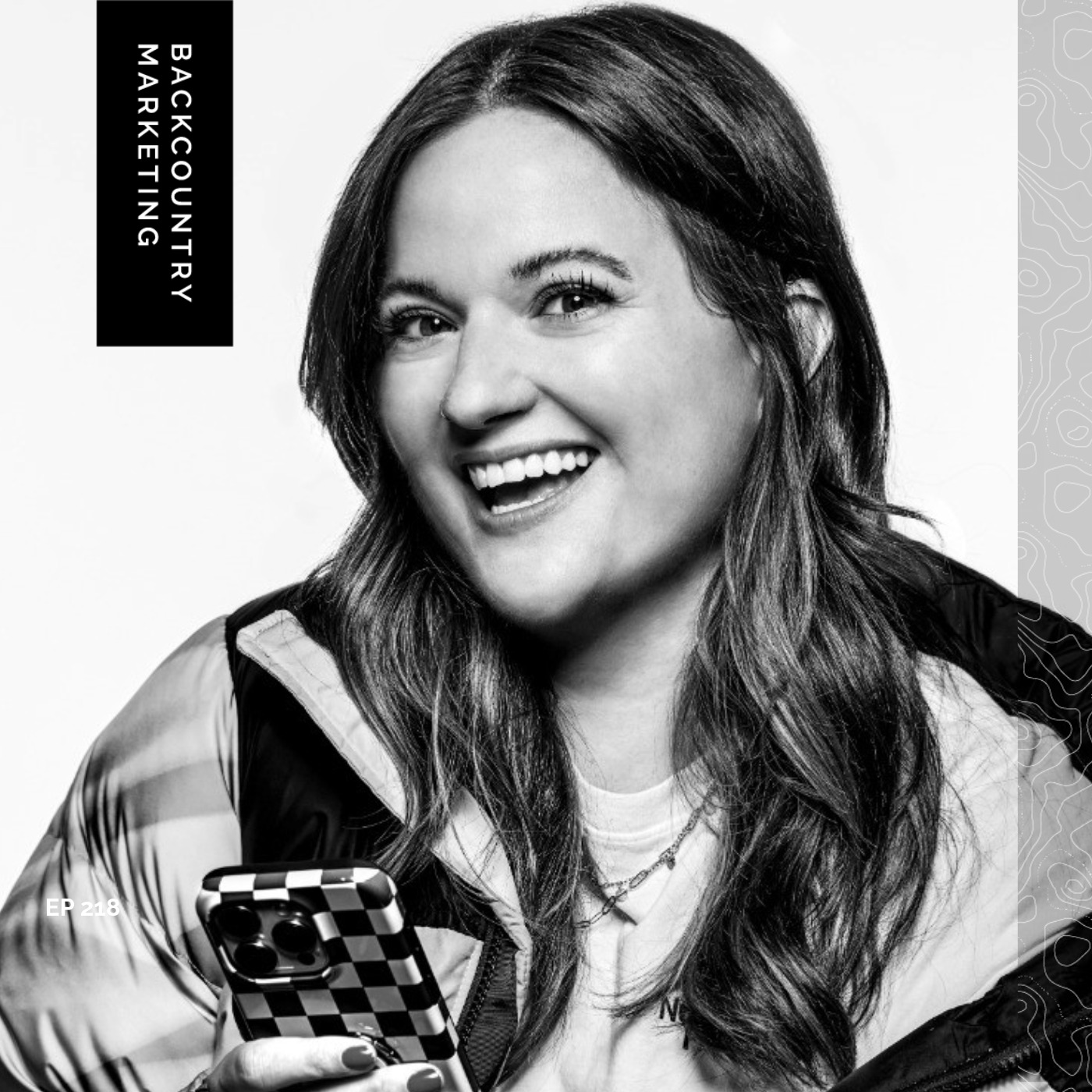
Every company has a brand, but very few have built one intentionally or with differentiation. We use the word “brand” interchangeably with “company,” when in reality most companies have never done the work required to intentionally shape what their brand stands for.
In this episode, I sit down with Marc Peruzzi, Creative Director at Cache Seven, to unpack one of the most misunderstood ideas in outdoor marketing: the difference between a company and a brand.
Marc shares why so many outdoor companies lose relevance when they chase “brand building” instead of grounding themselves in real people, real places, and real stories. We talk about authenticity, storytelling, influencer marketing, and why honesty consistently outperforms hype in the outdoor industry.
This conversation is a reminder that brand is not something you manufacture. It is something that emerges when a company knows who it is and who it serves.
About:
Enjoy this episode and discover other resources below:
Slack Community | Tired of brainstorming with ChatGPT? Join us!
Insight Deck | Want 20 of our favorite insights shared on the show?
Booklist | Here's our curated list of recommended books over the years.
LinkedIn | Join the conversation and share ideas with other industry peers.
Apple Podcast | Want to help us out? Leave us a review on Apple.
Guest List | Have a Guest in Mind? Share them with us here.

Episode Transcript
Marc Peruzzi (00:00):
But there's a great eyewear company in the mountain space that I loved my entire life. Eventually as with most eyewear brands, they were bought up by a bigger multinational type of corporation and they moved their headquarters out of the mountains. The idea was to turn what was a company into a brand and they completely lost their way because they forgot that companies are built around people doing real things in the outdoors. I had a good friend who worked at that company. I'm like, "What happened to the company?" They took a company and they tried to turn it into a brand and they lost their way.
Cole Heilborn (00:42):
On this podcast, we go behind the scenes with industry experts as they break down what it takes to produce creative work that works. If you're seeking insights from some of the sharpest minds of the industry, this is your guidebook to producing creative work that actually delivers. Welcome to the Backcountry Marketing Podcast. Today, I'm sitting down with Marc Peruzzi. He is the creative director at Cache Seven. Mark, welcome to the show.
Marc Peruzzi (01:03):
Thanks for having me. Nice to see you, Cole.
Cole Heilborn (01:06):
Yeah, it's good to see you. This is the first episode that we're recording in 2026, kicking off. Well, season 7 has already been kicked off by the time this episode has come out, but here we are sitting down at the beginning of January and we're jumping back into another year of episodes. So thanks for kicking us off.
Marc Peruzzi (01:24):
Yeah, thanks for having me on early in the year.
Cole Heilborn (01:29):
Well, we've got a fun conversation lined up for today. I feel like I say that in every episode because I guess that's the goal of the podcast. We're going to be talking about the difference between a brand and a company. We're going to be talking about influencer marketing and why it might or might not work very well in the outdoor industry. And then wait for this buzzword authenticity. We're going to come back to this word again, I think a few times in this episode. Marc, if you could give us a quick introduction on your background, that would be awesome. So folks kind of know a little bit about you, but before you do so, could you share a little bit about why these topics and ideas are things that you think about and why they're important for this conversation?
Marc Peruzzi (02:10):
Yeah. I guess they're fundamentally tied to my background. I come from an editing and writing background. That's where I spent the vast majority of my career. And as magazine editing shifted and we all started to do much more native content and custom content for brand partners, I started to wear a bit more of a marketing hat from time to time, but creative crosses over. So I just put a lot of thought into the differences between editorial and marketing and also the similarities. So that's kind of where I'm pulled most of the time. I'm trying to bring an editor's mindset to creative.
Cole Heilborn (03:01):
So yeah, let's come back to this concept of brands versus a company. Kind of give us your thesis or your opening statement, if you will, about this distinction.
Marc Peruzzi (03:10):
Yeah. Well, back in the early 2000s, I would hear a lot of marketing people talk about how they were brand builders. And I was kind of curious what they meant by that language. And to me, what I've seen over the years is that there are a lot of people that beat their chest and say that there's some sort of a savant at building brand, but brand is a pretty nebulous thing. And it's kind of hard to hold in your hands. You can't see it. And so I put a lot of thought into that. And when I was at Skiing Magazine, when I first got there, we were tasked with a pretty big challenge. So at the time, Skiing Magazine, Ski Magazine, and Warren Miller were all owned by the same company. We were part of Time Inc. But Ski and Skiing were pretty similar titles and the names were quite similar as well.
(04:11):
So we had to produce some separation in our readership and in the market. This great writer of my John Billman, I put him in touch with these two big rig truck driving brothers who lived in the Pacific Northwest and Western Montana. And they would drive their big rigs all around the west and they would park on mountain passes where there were skier is and ski a lot. So we put them out in a truck with those people. And what we ended up doing by telling stories like those and countless others is that we started telling the stories of real skiers again, which hadn't happened in the ski world for quite a while. And by doing so, we carved out a niche for ourself. And the product, which was great storytelling about real skiers, became our brand. And so storytelling to me has forever been completely intertwined with brand.
Cole Heilborn (05:16):
So when you say, I'm imagining you stumbling across someone's LinkedIn title when it says passionate brand builder or well-experienced brand builder. Sounds like you kind of take ... There's a little bit of beef with that. Tell me more.
Marc Peruzzi (05:32):
I think people come in and they take what is a company and they start to think how they can convert it into a brand. And there was a great ... I won't name names because they're still in business, but there's a great eyewear company in the mountain space that I loved my entire life. Later, when I got to know the people behind that company, many great people, I understood why they were leading. They lived the lifestyle. They were out there all the time. They were playing around with gear choices. They were connected. Eventually, as with most eyewear brands, there's a lot of money in that business because the margins are so huge that they were bought up by a bigger multinational type of corporation and they moved their headquarters out of the mountains. And the idea was to turn what was a company into a brand, and they completely lost their way because they forgot that companies are built around people doing real things in the outdoors.
(06:45):
And sorry to always circle back to the outdoors, but that's my background. And when you take those people out of the outdoors and you lose those connections, you stop being relevant to the market, in my opinion. So that's kind of that brand. The brand builder thing has always left a bad taste in my mouth because I had a good friend who worked at that company. I'm like, "What happened to the company?" They took a company and they tried to turn it into a brand and they lost their way.
Cole Heilborn (07:22):
All right. Okay. I feel like there's a lot we can dig into here. Let's start with, I guess, just defining some terms. What is a company and how do you define a brand? Let's start there.
Marc Peruzzi (07:34):
Yeah. I would say a company is a collection of people and I wouldn't go too much deeper than that with a shared mission and a passion. Without those things, you shouldn't even be in business.
Cole Heilborn (07:49):
And how do you define brand?
Marc Peruzzi (07:51):
Brand is a very, again, a super nebulous term that has no odor or taste, but it does exist. And I'm not a Luddite or saying you shouldn't use that term at all. I get it. To me, brand is a bit more about carrying that storytelling to its fruition as much as you possibly can. And being ... I know we were going to get back to it, but being authentic is inherently tied to that. As soon as you start chasing some image of what you think the company should be, and if you're misguided on that, then you end up just kind of lost in the marketplace.
Cole Heilborn (08:52):
So I mean, obviously we can't talk about brand without authenticity because those two are very well connected. But I'm curious, so you're talking about companies deciding to take this journey to become a brand. Can you walk me through that process and what are missteps that a company might take in trying to become a brand? And I guess I'm still a little ... I agree with your definitions. I think all too often we refer to companies as brands and most of those companies don't actually have a true brand, but can you clarify this journey and ... Yeah, help me understand that journey.
Marc Peruzzi (09:31):
Yeah, I can maybe do it best through another example. So a friend of mine, a bit of a mentor on the marketing side of things is David Perry. He was the CMO of Whistler Blackhawm and then went to Aspen for many years and then he helped start Altera Mountain Company, super successful. He's still involved with the ski industry with Silverton Mountain and Colorado. But anyways, David and everybody else up in Whistler at the time, they were looking at ... And I shouldn't say David, actually. Everybody in Whistler at the time was looking at Vail Resorts. This is the 1980s and saying, "Well, Vail is crushing it right now. They're getting way more skier visits than we are. What do we need to do with our marketing to pull skiers to Whistler, which is another massive ski and should be a global destination." And they thought, and this was not David, they thought that by vaping what Vail did, they could have similar success.
(10:46):
So what Vail was doing at the time was that they would take ski models, which are not ski athletes, and go out on a sunny bluebird day and have people with no hats on, with the wind in their hair and sunglasses on, jumping off a cornice together, that type of visual. And so Whistler did that. They started marketing Whistler like it was Vail and it was effective. They got skiers from around the world to show up at Whistler, but those skiers ended up being completely pissed because Whistler is not veil. Whistler is steep, it's kind of dark. The snow is different. You have to be a different type of skier to appreciate it. It's challenging and it's a different animal. It's not Sun Valley. It's not Vale, Colorado. And so they ended up with more skiers, but very unhappy skiers. So David came in and he's somebody who had been aware of Powder Magazine and what Powder brought to the ski industry around that same time.
(12:04):
And he was like, "Well, we're not going to do this anymore." And he looked at the photography and he hired Paul Morrison, who was a long time powder magazine photographer. And they got a bunch of real athletes and they went and shot the hell out of Whistler on storm days and showed Whistler as it really was. And lo and behold, Whistler became an international destination for that type of skier. People who are super passionate about the sport and like skiing in storms and like steep terrain and exposure and big, big steep lines. So to kind of pull that full circle, to me, what happened was is that he understood the Whistler brand, if you have it. It's like the Whistler brand is not something that we're going to chase. We're just going to be honest with ourselves and we're going to be honest with our customer base and tell them exactly what Whistler really is and see if that works and it did.
Cole Heilborn (13:17):
So is the lesson that you're trying to share there that if a company is trying to become a brand, often companies try to project what they want their brand to be if it isn't aligned with who and what their company is. Is that the lesson there?
Marc Peruzzi (13:32):
Yeah, that's the lesson there. I think Yeti has done a wonderful job of not the bike company, although they have as well, but I'm talking about the cooler company. They made incredible insulation at first, and those products really mean something to people, but it's a bit like selling insurance almost, right? Insurance is invisible and insulation is not super sexy. A cooler is not a work of art to look at. And even a lot of their tumblers and mugs and whatnot, although design-wise, they're nice. If you like a stainless steel tube, there's really not a lot to build a brand on. So they're like, "Well, what are the people doing with these products? Why do these products mean something to people? " And then they just kept coming back to the people that actually used them.
Cole Heilborn (14:42):
Okay. So you've shared a few examples here and I'm still trying to just, I think, fully understand your idea. So what did Yeti and what did Whistler do right that allowed them to take a company and build it into a brand? And what did this eyewear company not do right when they tried to build a company or start a company and turn it into a brand? What are the differences? What are the lessons?
Marc Peruzzi (15:03):
I think the biggest differences are one that revert to honesty type of idea with Whistler. And they're like, "That's not us. This is who we are. Let's be open and honest about it. Let's not try to get people who won't like this experience just to fill seats and book hotel rooms." And I think Yeti did something similar. We know we're not making some very splashy looking product. We're making something that's incredibly utilitarian. Let's talk about the people that actually use our product to find our place in the market. Whereas the sunglass company, they started looking to be more relevant in urban marketplaces and whatnot, and where they were just competing with every other sunglass brand. They lost that mountain town innovation and authenticity that they had been built around.
Cole Heilborn (16:15):
So you feel like when a company chases a brand, I mean, it sounds really simple and trite to say, but if they don't do it well, they risk losing their authenticity and then they lose the whole thing?
Marc Peruzzi (16:26):
I think so. Yeah. I mean,
Cole Heilborn (16:28):
You can see
Marc Peruzzi (16:28):
It happen around the outdoor industry.
Cole Heilborn (16:31):
So in that case, would you suggest that companies just remain a company and not try to chase a brand?
Marc Peruzzi (16:39):
Yeah, I think that's a good approach, actually. I did a lot of envisioning work for Altera and every time we ... Altera was just getting off the ground at that time. This was on 2018, just prior to the pandemic. So this kind of mega resort company just made all these connections. They bought resorts, they put them all under one pass and we're just getting off the ground with that. So we went from Skiia to Skeria to see what was working and what wasn't working. And it was the board of directors, a bunch of people from the local market who really had ties to that ski area, plus everybody, all the executives that worked at the Skiria. And we sat around in conference room and we talked about the origins of the skia. And then we had open and honest conversations about what the challenges were.
(17:45):
And when you start looking at yourself in that type of light, you stop really concerning yourself with brand building. You start thinking about how can our business best serve our customers and who exactly are our customers as well? So when you get to that level of insight or comfort with who your customer base is, then just like that Whistler example, you don't have to try so hard. You end up just understanding who you are as a business, who your customers are, and then the brand just follows from that. All those skieries are incredibly diverse. They had their own characters from the original founders. They had their own vibes. And if you try to turn Palisades formerly Squaw Valley into an incredibly friendly resort, you're trying to force the issue. It's a steep mountain. But on the other hand, if you're trying to turn Steamboat into something like for aggressive steep skiers, you're also missing the point that is the family resort and the group.
(19:10):
So let the mountains be themselves, let the companies be themselves, and you tend to find the right path.
Cole Heilborn (19:19):
I see. So it sounds like your rub is less with companies becoming brands, but trying to force something that doesn't feel right or doesn't fit who they really are.
Marc Peruzzi (19:30):
Yeah. And that might be with the whole brand builder type of ethos that you see a lot on LinkedIn. And it's been going on for years is that I can come in, I can tell you what this company is and turn it into a brand when they don't have the ... They often don't have the background and they're kind of forgetting the marketplace as well, where that company lives in the market is incredibly valuable.
Cole Heilborn (20:03):
I see. I do feel like those people though, while they might not be able to tell a brand or a company who they could become, I do feel like they can offer outside perspective and ask questions and offer some objectivity, which I see a lot of companies struggle with when they don't have someone who asks them hard questions.
Marc Peruzzi (20:25):
I agree with you 100%. And there's an entire new category of hires that people are making and they're just calling themselves storytellers, but they're essentially taking a journalistic approach, coming in to a company, asking a lot of questions, doing that envisioning type of work that I was talking about and then running with that, right? Meaning like, oh, I'm not coming in telling you what to do. I'm coming in and asking you a thousand questions. We're going to think about this and then we're going to move forward. And yeah, I had the luxury of helping a ski brand recently. Kesley Skis do exactly that as they're trying to regain their market positioning in the US. And we spent a lot of time talking about who is Kessley as a company and where did it come from? And probably more importantly, what does it mean to the ski consumer?
(21:30):
And I think that the work that we did with Kessley is putting them on really strong footing to become a product first company again, and to just stay on that path. Yet you can't just keep chasing new categories. So you have to own your core competencies.
Cole Heilborn (21:55):
Something that I guess I see from the content side of things, like when we step in with a client and we're helping them develop a content plan or a strategy behind say a film campaign, it's next to impossible for us to do a good job if a brand doesn't know who they are, if they don't have a strong point of view. And that's something that I feel like a lot of brands don't have is a strong point of view in how they show up in the world. Yet we call them brands. And I feel like you can't be a brand if you don't have a strong point of view about the world or the world that you operate with it. I'm curious to hear your thoughts on this. And I feel like this is one of the main reasons why a lot of brands struggle with their content is because say a ski company is out there just making a ski edit like the rest of the other 20 ski companies that exist out there.
(22:49):
There's nothing to differentiate that piece of content other than maybe the athlete or the terrain. And I feel like in these days, that doesn't cut it. You got to have something else.
Marc Peruzzi (23:00):
Yeah. I think they probably are capable of doing it internally for the most part. And I have seen a trend of companies with magazine journalism being where it is, hiring a lot of former journalists to come on and fill that kind of brand storyteller type of role. And that's not just about putting out social media content. It's about actually thinking about the company, talking to all the primaries, understanding where the company fits in the broader scheme of things, and then being able to articulate that in written word internally maybe for the company, but also consumer facing and for all manner of video that comes out later as well. You end up being able to parlay that introspection and thoughtfulness and journalism for lack of a better word, that type of approach and to figuring out, okay, this is who we are, these are the stories that we need to tell.
(24:13):
And then again, the brand can follow. But yeah, no, I agree with you. I see a lot of companies that they can't earn that true brand type of moniker because they keep chasing different things and they don't really know who they are, where they are in the marketplace. Well,
Cole Heilborn (24:33):
And I feel like this is one of the best ways to tell a litmus test for your brand is like ... So there's a lot of definitions for brand. The one that I always come back to is it's how your audience or your customers talk about you. It's how they describe you. And I feel like that's such a great way to determine, are we consistently ... In our audience's eyes, are we consistently ... Are they saying the same thing about us? And I think if they are, then you're on the right track, you're building a brand. The next question then is, are we building ... Are they saying the right things that we hope they're saying about us? Because that can go different ways too.
Marc Peruzzi (25:16):
Yeah. Yeah. No, I agree with what you're saying 100%. And yeah, I think it's kind of hard to be a mind reader and know exactly what your customer is thinking about you. But if you do that hard work of introspection, being honest with yourself and with the consumer, they tend to sniff it out. And I think that that type of storytelling actually starts to resonate pretty quickly with your customer base because it's just like anything. When somebody's trying to sell you something, the easy answer is always no. But when somebody's telling you a story about who they are as a company or who the people that use their products are, it's just like any good essay or story. It ends up making an emotional connection or logical connection with the end user. And that's essentially how you build trust with your community.
Cole Heilborn (26:34):
Yeah. So this kind of dovetails nicely into the second part of our conversation I wanted to talk about influencers and I mean, yeah, basically what you're doing with Cache Seven, tell me more about why influencers don't work in the outdoor industry.
Marc Peruzzi (26:47):
Yeah. I had always suspected that was the case, but I had no real hard numbers on that. I did help start a ski company a number of years ago, and our marketing person was like, "Well, we're going to need some influencers." And I was a little bit hesitant, and some of our pro athletes were also hesitant to go down that path. And it didn't seem like it worked for us that the influencers tended not to be the greatest skiers in the world. Not that that's everything, but they didn't command a ton of respect from the customer base that was interested in our product. And then a couple years later, I was at the Five Point Film Festival in Carbondale, Colorado, and Backbone Media had a seminar there, and they brought up this exact topic. They had some influencers, and they had some professional athlete/guide type people there on the panel.
(27:54):
And the moderator surveyed the crowd and said, "How many of you have ever purchased a product because an influencer said so? " And out of around a hundred people, maybe three people in a room raised their hands, and then they asked the same question about outdoor professionals, and nearly every hand in the room went up. So that became kind of my north star a little bit. So when I started chatting with the Cache Seven folks before I came on, that story was very much on a front in my mind. And so what we're trying to do with Cache Seven is we're trying to make the influencer economy, which we know works in other verticals. It crushes it in fashion and in makeup and all sorts of other categories, but it doesn't quite work in the outdoors because people can see through it a little bit that these people are trying essentially to be influencers and get a paycheck for the product that they're pushing, but their lives and their livelihoods are not tied to the gear that they use like true outdoor professionals are.
Cole Heilborn (29:18):
Marc, if you had to kind of summarize our conversation and leave folks with some next steps or some things for them to consider as they're going through their day-to-day, how would you want to wrap it up for them?
Marc Peruzzi (29:28):
Yeah, to me, it all just kind of circles back to that, don't chase shiny new objects, don't chase lingo and try to think of what a brand is. Think about who you are as a company, who your customers are, really, really dive deep into that, and then you'll get on the right path. I mean, the brand just naturally follows.
Cole Heilborn (29:56):
Okay. That's it. That's all it takes. Know yourself and know who your customer is and brand will follow. Marc, if folks want to follow along with you and the work you're doing at Cache Seven, or if they want to dig through the archives of stories that you have written over the years, where can people find you and your work?
Marc Peruzzi (30:12):
I mean, you can find a ton of my work on the outside archives. Stay tuned to Cache Seven because we're going to be launching a publishing hour.
Cole Heilborn (30:20):
Incredible. Well, Marc, thank you for the time. Thank you for the thoughts. I'm excited to see where you guys go with Cache Seven and yeah, it sounds like you're onto something really cool.
Marc Peruzzi (30:27):
Yeah, thank you, Cole. It was my great pleasure.
Cole Heilborn (30:30):
All right, have a great rest of your day. You too. Thank you for listening to this episode. If you enjoyed it, please consider sharing it with a friend or leaving us a review on Apple. And remember, as you're working on that next piece of creative, the difference between creative that works and doesn't work often comes down to the hard questions that you ask while you're shaping it.